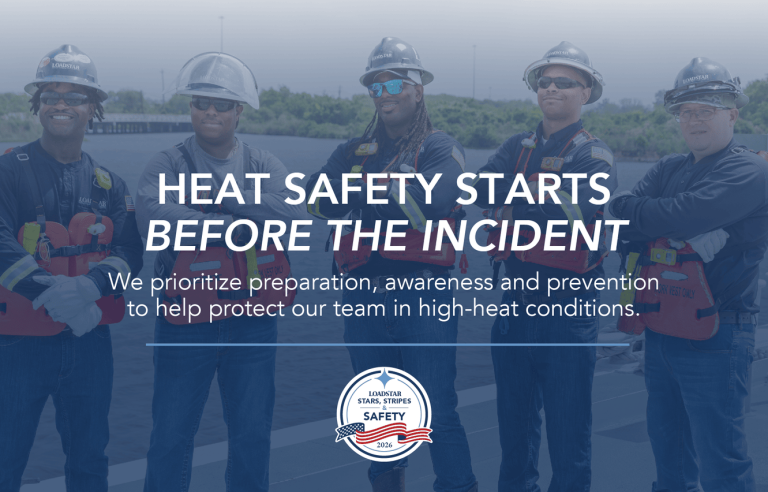
Millions of U.S. workers are exposed to heat-related hazards on the job. For employees working in field, marine and industrial environments, the combination of high temperatures, humidity, physical labor and required PPE can significantly increase the risk of heat stress and heat-related illness.
As part of Loadstar’s Stars, Stripes & Safety initiative, we are committed to helping prevent incidents through heat-stress awareness and education.
What Is Heat Stress?
Heat stress occurs when the body cannot cool itself properly. It often starts with small warning signs that can become serious if they are ignored. Heat-related illness can affect focus, coordination and decision-making, increasing the risk of injury on the job.
OSHA emphasizes water, rest and shade (WRS) as key steps for preventing heat-related illness.
Know the Early Warning Signs
Do not wait until symptoms become severe. If you or a coworker begins feeling unwell in hot conditions, report it immediately. Early warning signs of heat stress may include:
- Heavy sweating
- Headache
- Dizziness or lightheadedness
- Muscle cramps
- Weakness or fatigue
- Nausea
- Irritability
- Rapid heartbeat
Heat Exhaustion vs. Heat Stroke
Heat stress can result in heat-related illnesses, including heat exhaustion and heat stroke.
Heat exhaustion may include heavy sweating, weakness, dizziness, nausea, headache, cramps and a fast pulse. The employee should be moved to a cooler area, given fluids if alert and cooled down as quickly as possible. If left untreated, heat exhaustion can quickly progress to life-threatening heat stroke.
Heat stroke is the most serious heat-related illness and a medical emergency. Warning signs may include confusion, loss of consciousness, seizures, very high body temperature or hot skin.
If heat stroke is suspected, notify your site supervisor immediately.
Hydration and Recovery Best Practices
Hydration is critical. Make water breaks part of your work plan and encourage others to also drink at least one cup every 20 minutes, even if they are not thirsty.
To reduce heat risk:
- Drink water regularly throughout the day.
- Take rest breaks in shaded or cooled areas.
- Use electrolytes when working for extended periods in the heat. At Loadstar, we achieve this by ensuring all sites are supplied with MyHy electrolyte supplements to support employee hydration and recovery.
- Eat enough to support energy and recovery.
- Watch for signs of fatigue or confusion.
- Give your body time to recover after demanding tasks.
Look Out for Your Crew
Heat safety is a team responsibility. A coworker may not recognize their own symptoms right away. That is why checking in matters.
Ask simple questions:
- Are you feeling okay?
- Have you had water recently?
- Do you need a break?
- Are you dizzy, cramping or feeling sick?
If something does not seem right, speak up. A short pause to check on someone can prevent a serious incident.
When to Report Concerns
Report heat-related concerns as soon as symptoms appear. Do not try to “push through” dizziness, nausea, confusion, cramps or unusual fatigue. Early reporting helps supervisors respond quickly, adjust work as needed and protect the team.
Preventing heat-related illness requires awareness, communication and action. Stay hydrated. Take recovery seriously. Watch out for your coworkers. And when you see a risk, report it early.